Posted by Steve on Aug 5th 2026
Your First Range Trip: A Northern Nevada Checklist and Etiquette Guide
New shooters · Yerington, Nevada
Nobody is born knowing how a range works. The commands, the flags, the guy who yells "cease fire" and everybody freezes — it all makes perfect sense after one trip and looks like a foreign language before it.
So here is the whole thing, start to finish, written for the person who has never done it. Read this once and you will walk onto the line looking like you have been there before.
Before you leave the house
Two decisions save you the most grief. First, go with somebody experienced if you possibly can. Second, if you cannot, book an hour with an instructor instead of teaching yourself. An afternoon of professional coaching prevents a decade of bad habits, and it is cheaper than the ammunition you will waste figuring it out alone.
Then pack. Our short list:
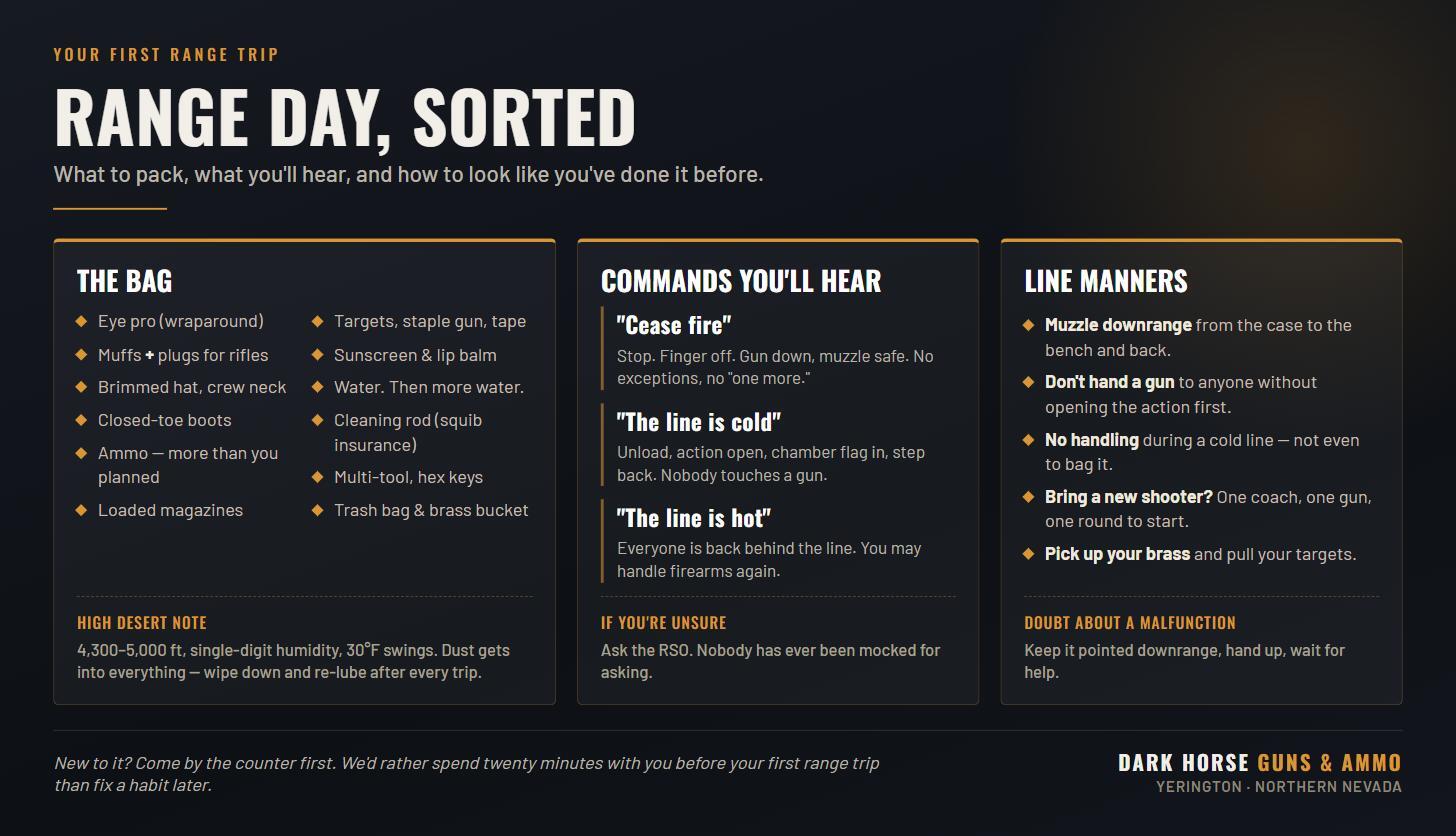
- Eye protection — wraparound, impact-rated. Regular sunglasses are not eye pro.
- Hearing protection — muffs, plugs, or both. Double up for rifles, braked guns, and covered firing lines. Hearing damage is permanent and painless while it happens.
- A brimmed hat and a shirt that closes at the neck. Hot brass down a collar is how people sweep the line. Ladies especially: crew necks, not V-necks.
- Closed-toe boots or shoes. No sandals, no canvas slip-ons.
- Your firearm, cased and unloaded, with the action open.
- More ammunition than you planned on. Everyone shoots more than they planned. Bring loaded magazines if you have spares.
- Targets, a staple gun and painter's tape. Many ranges sell targets, but not all of them.
- A cleaning rod — cheap insurance against a squib.
- Multi-tool and hex keys for optics and slings that loosen up.
- Water, sunscreen, lip balm. This is the high desert; the sun and the dry air will find you at 4,300 feet even in October.
- A trash bag and a bucket for brass.
When you arrive
Leave the firearm in the case until you are at a bench or a firing point. Check in at the office, read the posted rules, and tell whoever is running the place that it is your first time. Every decent range in Nevada will treat that as good news, not an inconvenience, and the range officer will keep an eye on you in a helpful way.
Then just watch for a minute. Where is the firing line? Where are the flags? Where does everyone stand when the line goes cold?
The commands, and what to actually do
- "Cease fire." Stop immediately. Finger off the trigger, firearm down on the bench, muzzle downrange. No "one more shot." Anybody on the line can call a cease fire if they see something dangerous, including you.
- "The line is cold." Unload, magazine out, action open, chamber flag in if the range uses them. Set the firearm down and step back behind the line. While the line is cold, nobody touches a firearm for any reason — not to pack it up, not to adjust a scope, not to show a friend.
- "The line is hot." Everyone is back and clear. You may handle firearms and resume shooting.
- "Range is going cold in five" or similar. Finish what you are doing and start unloading.
Line manners that make you welcome
- Muzzle downrange from the case to the bench and back. The most common rookie mistake is turning around with the gun in hand to talk to somebody.
- Never hand a firearm to anyone without opening the action first. And check any firearm handed to you, even if you watched them clear it.
- Ask before you touch anybody else's gear, and expect the same courtesy.
- Keep the bench tidy. Loaded magazines to one side, ammunition boxes closed, muzzle pointed downrange.
- If you have a malfunction you do not understand, keep the muzzle downrange, raise your hand, and wait. Do not turn around holding it.
- Pick up your brass and pull your targets when you are done. Ranges live or die on this.
- If you brought a new shooter: one coach, one firearm, one round in the magazine to start. Let them get through the first shot before you add anything.
What to actually do with your hour
New shooters almost always start too far out with too much gun. Do the opposite.
Start with a .22 if one is available. Start at seven yards on a big blank piece of paper — no bullseye, nothing to chase. The goal for the first magazine is not accuracy, it is comfort: grip, stance, sight picture, a smooth press, and following through without flinching. Fire five rounds, put the gun down, talk about it, and repeat.
Only after that starts feeling boring should you move the target out, add a bullseye, or step up in caliber. Fifty deliberate rounds teach more than three hundred fast ones, and they cost less.
The Northern Nevada specifics
- Altitude and dry air. Between roughly 4,300 and 5,000 feet, with humidity in the single digits a lot of the year. You dehydrate without noticing. Drink before you are thirsty.
- Sun. Between the elevation and the light coming off pale ground, an afternoon on an open range will burn you in spring as easily as in July.
- Dust. Grit is the number one cause of malfunctions out here. Keep the action closed and cased until you are ready, and wipe the firearm down with a light coat of oil when you get home — light, because heavy oil collects dust.
- Wind. Great Basin afternoons get honest about it. If you are working on precision, go in the morning.
- Cold. Winter mornings here change how a trigger feels and how thick your lubricant gets. If you carry in gloves, practice in gloves.
Afterward
Unload deliberately at the bench: magazine out first, then the chamber, then look, then look again. Case it with the action open. When you get home, clean it while the trip is fresh — it is the best time to notice a loose screw, a worn spring, or a magazine that is not feeding right.
And write down what you shot and what you noticed. Three trips from now that little note is the difference between "I think it groups low" and knowing it does.
Come by the shop
518 W Goldfield Ave, Yerington. Open Tuesday through Saturday, 10 to 5. Tell us it is your first range trip and we will help you put together a bag, pick a starter load, and point you toward the ranges and instructors people around here actually use.
Get in touchDark Horse Guns & Ammo LLC is a federally licensed dealer in Yerington, Nevada. This article is general safety information and is not a substitute for hands-on instruction from a qualified trainer. Range rules vary — always follow the posted rules and the range officer's direction at whatever facility you are visiting.