Posted by Steve on Aug 5th 2026
Rocky Mountain Elk Hunting in Nevada: The Draw, the Rifle, and the Pack-Out
Big Game · Yerington, Nevada
Elk are the biggest thing most Nevada hunters will ever put a tag on. NDOW lists Rocky Mountain elk as state protected big game, present across the state, with mature animals running from 500 to well over 1,000 pounds. A bull's antlers can stand four feet above his head.
Everything about hunting them here is bigger: the tag is harder to draw, the country is farther from Yerington, the rifle needs to be more serious, and the work after the shot is on a scale that surprises people who have only ever packed out deer.
License and tag
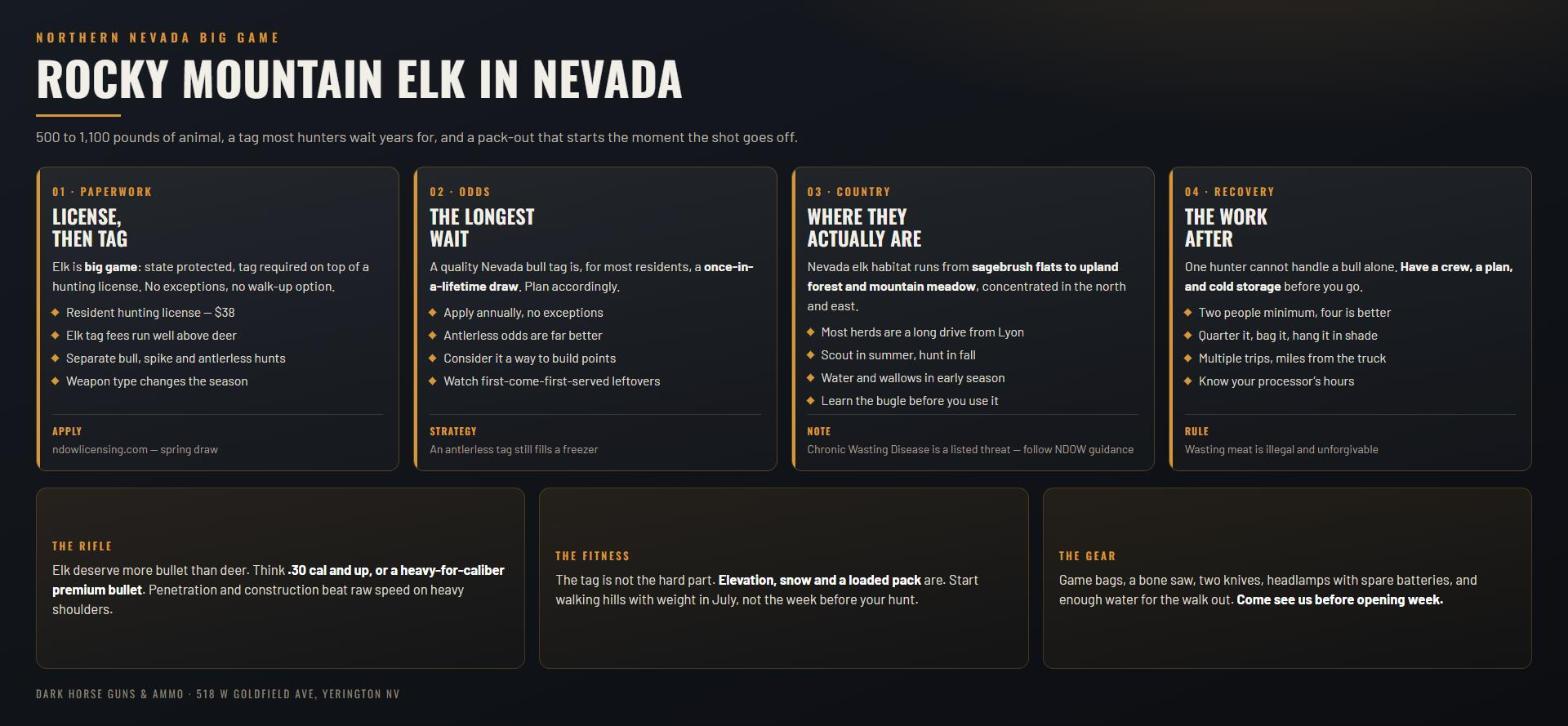
The structure is the same as every other big game animal in Nevada. You buy a hunting license, then you need an elk tag on top of it. There is no over-the-counter option.
At the fees NDOW currently lists, a resident adult hunting license is $38, the resident adult combination hunting and fishing license is $75, youth combination for ages 12 to 17 is $15, and a nonresident adult combination is $155. Elk tag costs sit well above deer tag costs and vary by hunt and residency. Confirm everything on the NDOW licenses, tags and permits page before you apply.
The draw, realistically
For a resident hunter, a quality Nevada bull elk tag is close to a once-in-a-lifetime event. That is not pessimism, it is just how the point totals work in the better units.
Which means two things. First, apply every year without exception, because bonus points are the only currency that matters and a skipped year is gone permanently. Second, take a serious look at the hunts you can actually draw.
- Antlerless tags draw far better than bull tags in most units, and a cow elk fills a freezer just as well. If your goal is meat and experience rather than antlers, this is the smart play.
- Spike hunts exist in some areas and often carry better odds than a mature-bull hunt.
- Weapon choice matters. Archery and muzzleloader hunts run on their own dates and their own quotas.
- Watch the leftover list. First-come, first-served tags released after the draw are worth checking every year.
- Landowner, auction and raffle tags are the other doors in, if you have the resources or the luck.
Where the elk actually are
NDOW describes elk habitat as ranging across sagebrush flats, upland forest, mountain meadow and alpine country. In Nevada, the strongest herds sit in the northern and eastern parts of the state, which means most Lyon County hunters are looking at a long drive and a real camp rather than a day trip.
Plan for that. Scout in summer if you can, get eyes on water sources and wallows, learn the road system before there is snow on it, and have a backup drainage picked out for the morning you find four other trucks at your trailhead.
One more note from NDOW's own species page: Chronic Wasting Disease is listed as a threat to Nevada elk. Follow current NDOW guidance on carcass transport, testing and disposal, and pay attention to it even in years when it feels like a formality.
Bring enough rifle
Elk are not deer with bigger antlers. They are heavy-boned animals that soak up marginal hits and then walk into the worst canyon on the mountain.
Practically, that means .30 caliber and up, or a heavy-for-caliber premium bullet in something smaller that you shoot genuinely well. Bullet construction and penetration matter far more than muzzle velocity. A tough bonded or monolithic bullet that drives through a shoulder is worth more than another two hundred feet per second.
And as always, the rifle is the easy part. Practice from field positions, at the ranges you actually intend to shoot, in the cold, wearing the clothes you will be wearing. Then set your limit and hold it.
The work starts when the shot ends
This is the part that catches first-time elk hunters. A bull down two miles from the truck is somewhere between four and eight loaded trips, or one very long day with a good crew.
- Have people. Two hunters is the minimum. Four is better. Arrange it before you leave, not by cell phone from a canyon with no service.
- Quarter and bag immediately. Get the hide off, get the meat into breathable game bags, and get it hung in shade with air moving through it.
- Cool it fast. Elk hold heat. A carcass left in a pile will sour from the inside while the outside still feels cold.
- Know your processor. Their hours, their capacity during peak week, and whether they take drop-offs after dark.
- Carry the right tools. Two knives, a sharpener, a bone saw, headlamps with spare batteries, and more water than you think.
Wasting edible game meat is illegal in Nevada. Beyond the law, an elk represents years of waiting for most hunters. Treat the recovery with the same seriousness you gave the shot.
Get in shape before you get a tag
The honest limiting factor on most Nevada elk hunts is not marksmanship and not the draw. It is elevation, weather and a loaded pack. Start walking hills with weight in July. Do it in the boots you plan to hunt in, so you find the hot spots in August instead of on day two of a hunt you waited eleven years for.
Verify everything here
- NDOW licenses, tags and permits
- NDOW Plan Your Hunt
- NDOW rules and regulations
- NDOW Rocky Mountain elk species page
For the licensing and bonus point basics in more depth, see our post on mule deer hunting in Northern Nevada.
Let us help you get the rig right
We are at 518 W Goldfield Ave in Yerington, open Tuesday through Saturday, 10 to 5. Elk hunting is a bad place to discover your scope mounts were loose or your ammunition does not group. Bring the rifle in, talk through bullets, get glass mounted and torqued properly, and pick up the field-care gear you are going to need at the worst possible moment.
Get in touchDark Horse Guns & Ammo LLC is a federally licensed dealer in Yerington, Nevada. This article is general information for hunters, not legal advice and not an official statement of Nevada hunting regulations. License fees, tag costs, quotas, season dates, unit boundaries and disease-related carcass rules change. Always verify current requirements directly with the Nevada Department of Wildlife or the appropriate land management agency before you hunt.